In short
- Milk protein, milk fat and sugar each mute a different part of matcha’s taste, so a matcha that suits drinking can taste weak in ice cream.
- A blend of first flush (umami depth) and second flush (firmness) is a reasonable way to keep flavor, color and bitterness in balance.
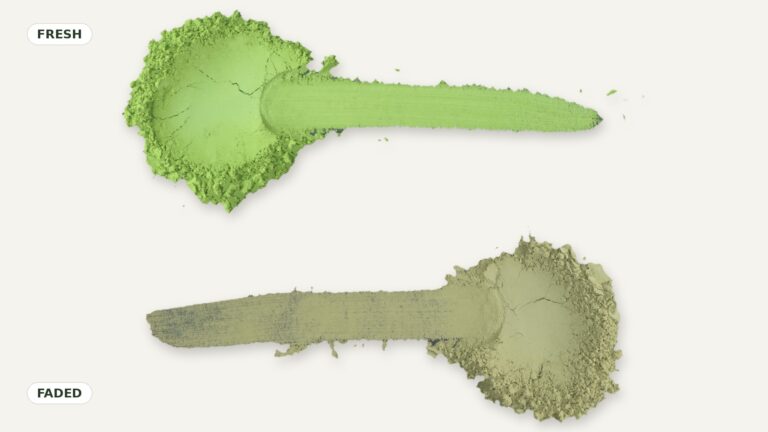
- Color and freshness depend on the leaf, on heat, and on how the powder is stored.
- Test any matcha in your own base and adjust the dose.
Choosing matcha for ice cream is different from choosing it for drinking. The base changes how matcha tastes, so the best drinking matcha is not automatically the best ice cream matcha.
Why a dairy base changes matcha’s taste
Food scientists have studied how milk protein, milk fat and sugar affect taste, mostly using tea, dairy and other flavored foods, not matcha ice cream specifically. Matcha’s bitterness and astringency come mainly from catechins, and its aroma comes from volatile compounds, the same as in other teas. So these findings apply to matcha too, even though the research was not done on matcha itself.
Milk protein softens astringency
Sensory studies show that caseins, especially β-caseins, bind tea catechins strongly and reduce the astringency the polyphenols cause.3 A 2024 review describes the same β-casein and catechin binding as giving milk tea a more pleasant taste by reducing astringency.4
Fat holds back aroma
A review of ice cream science reports that higher fat generally means slower flavor release, lower flavor intensity and longer-lasting flavor, because most volatile odour molecules dissolve more readily in fat than in water.1 In a controlled study of flavored ice cream, low-fat samples released more hydrophobic aroma compounds than high-fat ones, and at low fat levels, lower-protein samples also released more aroma compounds.2
Sugar softens bitterness and astringency
A 2021 sensory study found that adding sugar raises the concentration at which tea catechins can be detected, so bitterness and astringency are perceived less.5 Another study found that sucrose reduced the bitterness of caffeine and other compounds from moderate to weak in adults.6
- Matcha and waterFull flavor, aroma and astringency.
- Add milk proteinCatechins bind to casein, so astringency softens.
- Add milk fatFat dissolves aroma compounds and slows their release.
- Add sugarBitterness and astringency are perceived less.
Taken together, milk fat mutes aroma while milk protein and sugar mute astringency and bitterness. All three push a delicate matcha toward tasting weak.
What test kitchens and recipe writers find
Practical testing points the same way. America’s Test Kitchen says high-priced ceremonial and premium matchas suit drinking only, because their subtle characteristics are lost in other uses, while culinary matcha is what goes into cooking.15 It also found that culinary matcha in whipped cream let more sweet, grassy notes come through and complemented the dairy flavor, and it advises using color as a guide: the darker the item, the stronger the matcha flavor.15
- A matcha ice cream recipe developer recommends culinary grade over ceremonial, and suggests adding an extra teaspoon if you want more matcha flavor.16
- A pastry chef and recipe developer says culinary grade offers robust flavor and is more cost-effective, and that ceremonial grade is probably overkill in ice cream.17
- Another recipe writer advises tasting after cooking and adding more matcha if needed, since brands and preferences vary.18
A note on the evidence. These are practitioner sources, not peer-reviewed research. They agree with what the science above predicts.
Why a first- and second-flush blend makes sense
Three qualities matter in ice cream: strong matcha flavor, good green color and moderate bitterness. Each harvest contributes something different.
| Quality | First flush (spring) | Second flush (summer) |
|---|---|---|
| Umami amino acids | Higher7 | Lower, with less umami and sweetness78 |
| Catechins and caffeine | Lower | Higher: the bitter and astringent compounds78 |
| Likely role in a blend | Depth and richness | Firmness that survives dairy |
Shiga Prefecture research reports that catechin content is higher in second and third flushes than in first flush, and that those later flushes are lower in the amino acids that provide umami.7 Minamikyushu City, a tea-producing municipality in Kagoshima, says second flush grows under longer daylight and contains more catechins and caffeine, with less umami and sweetness.8
Inference, not a measurement. Since milk protein and sugar soften catechin astringency, it is reasonable to infer that a second-flush component helps a matcha keep its firmness in ice cream. The flush figures above are for green tea generally, not matcha specifically.
Green color depends on the leaf and the processing
Color depends on more than which flush the leaf comes from.
- Kagoshima Prefecture research found that matcha color is a deeper, more vivid green when the fresh leaves have more chlorophyll and are thinner.9
- Fukuoka Prefecture research notes that industry standards define matcha as tencha, made from shade-grown leaves dried without rolling and stone-milled into a fine powder.10
- Nagasaki Prefecture testing showed chlorophyll levels falling as heating temperature and time increased, so pasteurizing your base will cost you some color.11
Protect color and flavor in storage
- A 2024 Japan Society for Food Science and Technology conference abstract names chlorophyll photobleaching as a cause of color change in green tea.12
- A Beppu University study found that gas-barrier packaging such as aluminum bags, sealed and kept at about 41°F (5°C), best preserved tea quality, and that replacing the air with nitrogen helped further.13
- Kyoto Prefecture’s tea research institute reports that opened tea kept at room temperature in its original package loses flavor within one to two weeks.14
Keep matcha sealed, dark and cold, and use it quickly once opened.
Choosing matcha for ice cream
- Choose a blend. Pair first-flush depth with second-flush firmness.
- Check the color. Look for vivid green powder, since color reflects chlorophyll and leaf quality.
- Test in your own base. Adjust the dose, because milk fat, protein and sugar will mute it.
- Store it well. Keep it away from light, air and heat.
References
Flavor science
- Ice Cream Science. Review of the role of fat in ice cream. icecreamscience.com
- PubMed 29934147. Fat and protein effects on aroma release from ice cream. pubmed.ncbi.nlm.nih.gov
- Food Chemistry. Casein and tea catechin binding and astringency. sciencedirect.com
- Foods (MDPI), 2024. Review of milk protein and tea polyphenol interactions. mdpi.com
- Journal of Sensory Studies, 2021. Sugar and detection thresholds of tea catechins. onlinelibrary.wiley.com
- PubMed Central, PMC4270254. Sucrose and perceived bitterness. pmc.ncbi.nlm.nih.gov
Tea chemistry, color and storage
- Shiga Prefecture. Catechins and amino acids by harvest. pref.shiga.lg.jp
- Minamikyushu City. Chiran tea types and harvest seasons. city.minamikyushu.lg.jp
- Kagoshima Prefecture. Matcha color and leaf characteristics. pref.kagoshima.jp
- Fukuoka Agriculture and Forestry Research Center. Definition of matcha and food-use powdered tea. farc.pref.fukuoka.jp
- Nagasaki Prefecture. Effect of heating on chlorophyll. pref.nagasaki.jp
- Japan Society for Food Science and Technology (J-STAGE). Chlorophyll photobleaching in green tea. jstage.jst.go.jp
- Beppu University repository. Packaging and storage of tea. beppu-u.repo.nii.ac.jp
- Kyoto Prefecture Tea Research Institute. Storage of opened tea. pref.kyoto.jp
Test kitchens and recipe developers
- America’s Test Kitchen. What is matcha? americastestkitchen.com
- Proportional Plate. Not too sweet matcha green tea ice cream. proportionalplate.com
- Catherine Zhang. Matcha ice cream recipe. zhangcatherine.com
- Definitely Not a Chef. Matcha pastry cream recipe. definitelynotachef.com
Get new articles by email
One email when we publish. Research summaries and tasting notes, with sources.